TPE vs Silicone Menstrual Cup
Read this detailed post and explore more stories from our blog.
Every day we discuss the most interesting thingsdiscuss
Friday, Feb 6, 2026
TPE vs Silicone Menstrual Cup: A Complete Comparison for First-Time Buyers
Switching to a menstrual cup for the first time can feel stressful. The idea of inserting something new down there sounds daunting. Will it leak? Will it hurt? Is it safe? If these questions are on your mind, then you're not alone; surveys show about 70% of first-time users worry most about comfort and material safety.
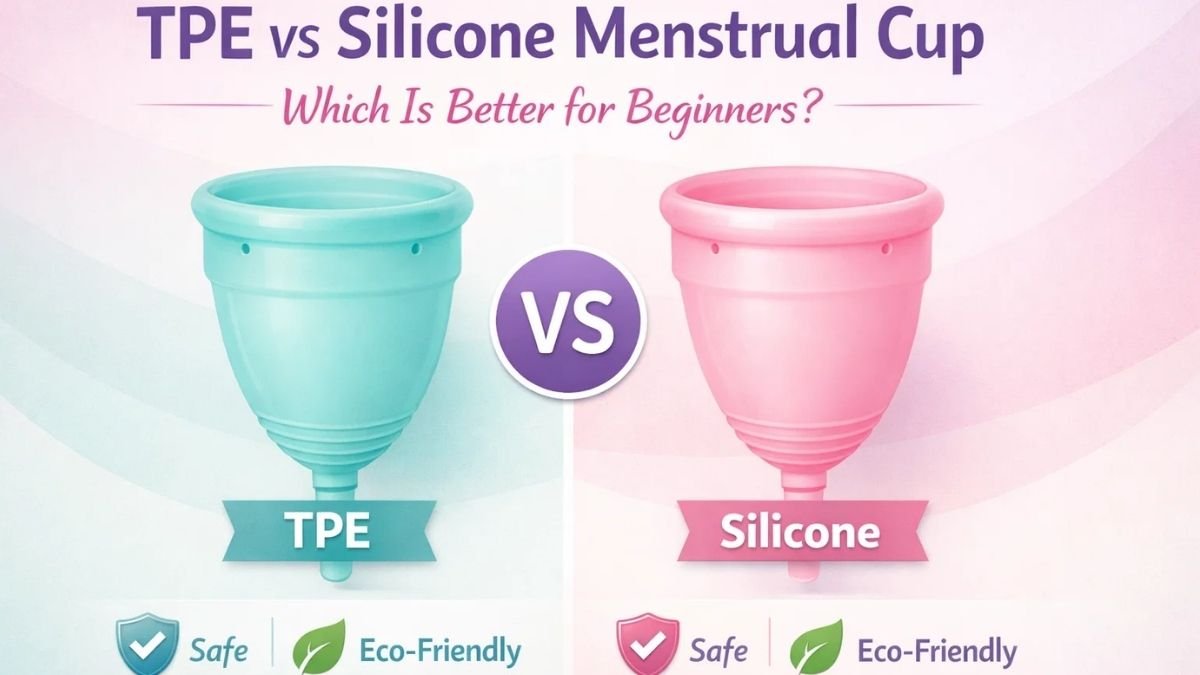
The moment you start searching for the right cup, one question immediately shows up everywhere: TPE vs silicone menstrual cup: which one is better? Let’s help you choose.
If you’re a first-time buyer, the differences between these materials can feel confusing. Both are safe when sourced from reputable brands like Pee Safe. Both are safe, reusable, and eco-friendly, but they offer very different experiences in terms of softness, durability, heat resistance, and long-term comfort.
That's why this TPE vs silicone menstrual cup breakdown focuses on real facts about menstrual cups for first-time buyers, based on medical reviews and brand tests to cut through the confusion, and help you find the best menstrual cup that suits your needs.
Material Comparison: TPE vs Silicone Menstrual Cup (Beginners Guide)
Most cups use menstrual cup materials like TPE or silicone PubMed Central notes these make up 90%+ of options, alongside some natural rubber, all tested for body contact. No need for fancy jargon; here's the easy difference.
What is TPE?
TPE menstrual cup means thermoplastic elastomer. It’s a soft, flexible plastic that becomes adaptable with body heat. TPE menstrual cups are popular in India due to their affordability, often priced between ₹500 and ₹900. These cups are body-safe, latex-free, and platinum-free, making them a hypoallergenic choice. Many menstrual cup brands in India use TPE to offer budget-friendly options.
Why some brands use TPE for menstrual cups:
- It softens when warmed by the body, which can make insertion and removal easier.
- It often has a gentler grip against the vaginal walls.
- It’s generally more affordable than silicone-based cups.
- It can be easier to fold because it’s naturally pliable.
Things first-time buyers should know:
- TPE cups can lose firmness slightly faster than silicone.
- They have a lower heat tolerance, so you need to be careful when sterilizing.
- Some people love how soft they are; others find them too collapsible.
- May stain sooner and lose firmness with time.
If you prefer a very soft cup or you’ve had discomfort using firmer silicone cups, a TPE menstrual cup might suit you well.
What is Medical Grade Silicone?
A silicone menstrual cup is made from medical-grade silicone rubber, a material used in implants and surgical devices. This means it is FDA-approved, non-porous, and highly safe against bacterial buildup. Silicone cups generally cost more (₹800 to ₹1,800) but offer longer durability and proven safety. Brands like Pee Safe are the best choice for the best menstrual cup brand in India.
Why some brands use medical-grade silicone for menstrual cups:
- The medical-grade silicone menstrual cup has the longest safety record.
- Silicone menstrual cups have the highest durability.
- Silicone is already used in implants, catheters, and medical tools.
Things first-time buyers should know:
- A silicone menstrual cup is more durable and economical in the long run.
- Silicone menstrual cups are best for heavy menstrual flows.
- It holds shape perfectly and is ideal for an active lifestyle.
Safety & Biocompatibility
Safety always comes first. So, the question arises: Is TPE or silicone safe for a menstrual cup? The absolute answer is that both TPE and silicone menstrual cups are completely safe for beginners. Both materials are hypoallergenic and safe.
TPE is safe for menstrual cups because it's:
- Skin friendly
- Latex-free
- Passes biocompatibility tests
- Has zero phthalates or BPA (bisphenol A)
- The risk of toxic shock syndrome (TSS) remains under 0.01% with proper cleaning
Silicone is safe for menstrual cups because it’s:
- Made with medical-grade silicone, which is also used in hospitals, implants, and medical tools
- The medical-grade silicone menstrual cup has the longest safety record, so many users feel more confident with it
- Designed for biocompatibility, which means it works safely with living tissues
- Has zero phthalates or BPA (bisphenol A)
Silicone is safe for menstrual cups because it’s:
- Made with medical-grade silicone used in hospitals and implants
- Has the longest safety record
- Designed for biocompatibility with living tissues
- Has zero phthalates or BPA
Firmness, Fit & Comfort
Beginners often worry about whether the menstrual cup should be firm or flexible to feel comfortable. Using a cup takes practice, but it becomes effortless once you learn it.
Comfort and Fit of TPE Menstrual Cups for Beginners
Cups made from TPE start a bit stiff, which helps them pop open inside you and prevents leaks. After that, they soften and gently fit your body shape. For people with a low cervix, the TPE cup works really well. Smaller cups are better for teenagers or women who’ve had children.
Comfort and Fit of Silicone Menstrual Cups for Beginners
Silicone cups stay soft and squishy, making them easier to insert and take out. Some helpful tips for beginners: fold the cup in a "C" shape, use a bit of water-based lubricant if needed, and try to relax your pelvic muscles.
Research shows that about 75% of people keep using their cup after the first month because they like how gentle silicone cups feel. For those just starting, many silicone cups start around ₹900–₹1000. Pee Safe is a great, affordable brand to try.
Cleaning, Sterilization & Heat Tolerance
Sterilizing menstrual cups is really easy and essential to avoid bacterial infections.
- Boil for 3–5 minutes before first use and after every period
- Avoid bleach, vinegar, or scented products
- Use a steam sterilizer for faster cleaning
- Don’t put your menstrual cup directly into the microwave; instead, put it inside a menstrual cup sterilizing container, fill it with boiling water, and microwave it for 2-3 minutes.
How to clean daily:
- Empty into toilet
- Rinse with cold water
- Use mild soap
- Final rinse and store dry
Important note: TPE material can handle heat up to 120°C. You can boil a TPE menstrual cup for 2 to 5 minutes to clean it, but don’t boil it for too long because it can get damaged.
Durability, Lifespan & Cost
How long do TPE vs silicone menstrual cups last? Silicone menstrual cups can be used for 5-10 years with proper care. While TPE menstrual cups can be used for 2-5 years.
Which Material is Best for First-Time Buyers?
Best menstrual cup for first-time users (silicone or TPE)? Choose only what suits your body. Prioritise silicone for consistent softness, bombproof sterilization, and proven medical record. Buy Pee Safe Medium menstrual cup (boil-safe, starts around ₹900-₹1000) if you want strong reliability.
If you're prioritising budget or eco-first options, then go for TPE.
TPE vs silicone pros and cons: Silicone for safety pros, TPE for wallet wins. Take the quiz on the Pee Safe site to match your flow/cervix.
FAQs
Is TPE or silicone better for menstrual cups?
Silicone for longevity/safety; TPE if cost/recycling matters.
Are TPE menstrual cups safe for sensitive skin?
Yes. TPE cups are hypoallergenic and latex-free.
Can I sleep with a menstrual cup?
Yes, safely up to 8–12 hours.
Can I swim or exercise while wearing a cup?
Yes, cups are ideal for active lifestyles.
Can virgins use menstrual cups?
Yes, they are safe and do not affect virginity.
Conclusion
Choosing between a TPE and a silicone menstrual cup is about what feels right for you and how your body responds to it. If you want a cup that’s soft, gentle, and budget-friendly, TPE is a comfortable place to start. If you prefer something stronger, long-lasting, and easy to sterilize, silicone will quickly become your best friend.
Silicone edges for most menstrual cups for beginners, thanks to heat-proofing and track record. Grab a small size, practice folds, and consult your gyno. Switching to a cup is not just a product change, it’s a lifestyle upgrade. Whether you choose TPE or silicone, you’re choosing comfort, confidence, and sustainability.
If you’re still unsure about choosing TPE vs silicone menstrual cup, start with a trustworthy brand, follow your flow type, and choose a size that feels right. Your body will tell you what works.
And that feeling of switching from “Will this work?” to “Why didn’t I do this earlier?”, that’s when you know you’ve found the right cup.
All Blogs
Why Gen Z Is Ditching For The Beauty Ana..
Makeup Why Gen Z Is Ditching Doomscrolling For The Beauty An...
Nike vs Adidas: Which Brand Has Better D..
Shopping Guides • Published on mycouponstock Nike vs. Adidas...

America's most (and least) deal-obsessed..
America's most (and least) deal-obsessed cities: A study of ...
Cashback vs. Verified Codes: Why We Comp..
Cashback vs. Verified Codes: Why We Compete On Accuracy, Not...
Which Online Stores Offers Student Disco..
Which Online Stores Offer Student Discounts? We Analyzed Mil...

Top 5 Coupon Sites France, Germany, Ital..
The Top 5 coupon sites in France, Germany, Italy & Poland. F...

May Sale and Top Deals in USA..
Memorial Day Sale USA 2026: Best Online Stores Sale in USA M...

The Ultimate Guide to Ramzan Offers..
The Ultimate Guide to Ramzan Offers 2026 Top Sales, Discount...
Best Cream for Pimples and Dark Spots..
Best Cream for Pimples and Dark Spots - Where to Buy Them fo...

Best Neckband Headphones..
Home › Blogs › Best Neckband Headphones Best Neckband Headph...